Installing solar panels in Florida often feels like an obvious win. With rising utility rates, year-round sunshine, and strong demand for energy-efficient homes, solar can be a smart move for many homeowners.
However, many Florida homeowners discover a hidden issue buried in solar financing agreements only when they try to sell or refinance. That issue is called a UCC-1 lien.
If you lease solar panels or finance them through a traditional solar lender, a UCC-1 lien may be filed in connection with your solar system. While it may seem harmless at installation, it can create serious friction later during Florida real estate transactions.
This article explains what UCC-1 liens are, how they work in solar financing, why they affect Florida homeowners differently, and how to avoid them entirely.
What Is a UCC-1 Lien?
A UCC-1 lien is a legal filing made under the Uniform Commercial Code. It allows a creditor to claim a security interest in personal property used as collateral for a loan.
In solar financing, the lien is typically tied to the solar equipment. Because solar panels are permanently attached to a home, the lien often becomes entangled with the property itself during title searches and mortgage underwriting.
In Florida, UCC-1 filings are public record and commonly surface during home sales, refinancing, and equity transactions.
How UCC-1 Liens Work in Solar Financing
In a typical solar financing arrangement, the solar lender files a UCC-1 financing statement with the Florida Secretary of State. The solar system is listed as collateral, and the filing becomes searchable by title companies, lenders, and potential buyers.
The lien remains active until the solar loan or lease is fully paid off or formally released by the lender. While this protects the lender, it introduces complications for homeowners at the time of sale or refinance.
Why Solar Lenders Use UCC-1 Liens
Solar lenders rely on UCC-1 liens because solar panels are difficult to repossess and have limited resale value. Removing and reinstalling rooftop panels is expensive, and used solar equipment rarely sells for meaningful amounts.
By filing a UCC-1 lien, lenders protect their financial interest if a borrower defaults. Unfortunately, this protection often comes at the homeowner’s expense.
The Problems UCC-1 Liens Create for Florida Homeowners
Selling a Home in Florida
UCC-1 liens frequently complicate home sales in Florida. Title companies often flag solar liens for additional review. Buyers may hesitate when they learn solar debt is attached to the property. Mortgage lenders often require liens to be removed or subordinated before approving loans, which can delay or derail closings.
In competitive Florida markets, even small delays can cost homeowners a sale.
Refinancing Challenges
Florida homeowners refinance often to lower rates, access equity, or fund improvements. A UCC-1 lien can block or slow this process. Mortgage lenders may require lien removal before refinancing, and solar lenders are not obligated to cooperate quickly.
This can cause homeowners to miss favorable refinancing opportunities.
Debt-to-Income Impact
Solar loans and leases are treated as consumer debt rather than utility expenses. This increases debt-to-income ratios for both sellers and buyers. Many buyers qualify for the home itself but fail once solar payments are included.
Appraisers also struggle to credit full solar value when ownership and lien status are unclear.
How to Avoid UCC-1 Liens Entirely
The only reliable way to avoid UCC-1 liens is to avoid third-party solar financing that requires them. When solar is financed as a separate consumer loan or lease, a lien is almost always filed to protect the lender.
The financing structure matters just as much as the solar system itself.
Clear-Title Solar™ Eliminates These Issues
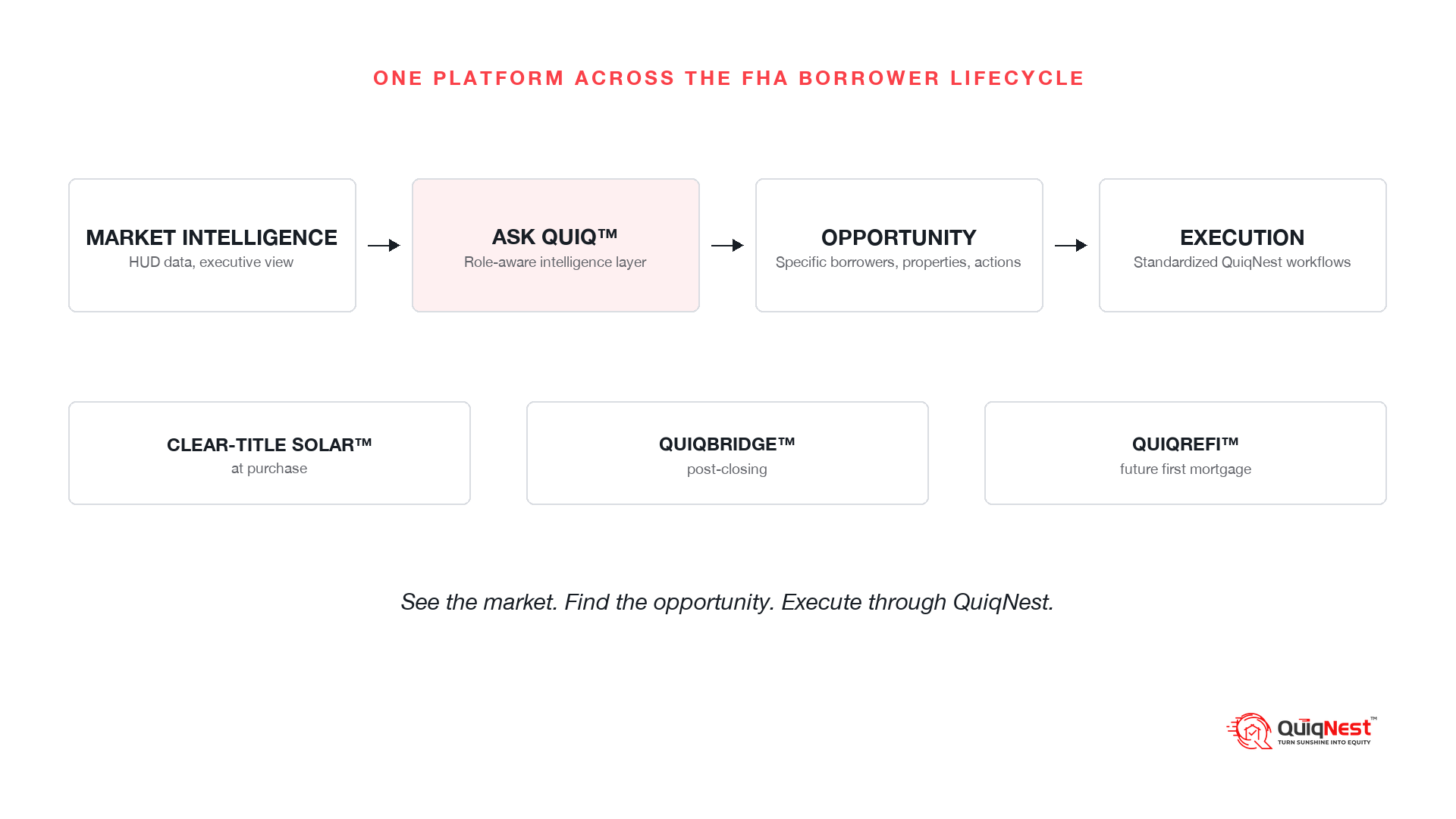
Clear-Title Solar™ eliminates UCC-1 liens by integrating the cost of solar directly into the home’s primary mortgage instead of attaching it as separate consumer debt.
With this structure, solar becomes part of the real estate itself. No UCC-1 filings are required, and the property title remains clean. Florida homeowners benefit from smoother sales, easier refinancing, and a larger buyer pool because there is no additional solar loan to assume.
When solar is integrated into the mortgage rather than financed as a standalone loan, payments may qualify as mortgage interest rather than consumer debt, depending on individual circumstances.
Final Thoughts for Florida Homebuyers
UCC-1 liens do not just complicate solar. They complicate real estate.
For Florida homeowners planning to sell, refinance, or protect long-term property value, how solar is financed matters as much as the panels themselves.
Clear-Title Solar™ represents a shift away from lien-based solar financing and toward a structure that aligns with how Florida homes are bought, sold, and refinanced. Solar should strengthen your home’s future, not restrict it.